

• Downloads
  • Contact Us
  • Directions
  • Deutsch Deutsch German de
  • English English English en
  • 简体中文 简体中文 Chinese (Simplified) zh-hans
Epitype GmbH
  • Products
  • About us
    • Management
    • Team
    • Research projects
    • Publications
    • Press
    • Jobs
  • Contact
    • Directions
    • Contact Us
  • News / Blog
  • Click to open the search input field Click to open the search input field Search
  • Menu Menu

Tag Archive for: HPV

Positive HPV test: What now?

Blog
Frauenärztin führt HPV-Abstrich durchShutterstock / Image Point Fr

Since the beginning of 2020, when early cervical cancer screening in Germany was supplemented by a routine HPV test for women over 35, more people have been confronted with a positive test result. First, it is important to mention: This is not a reason to panic. A positive HPV test result is not to be equated with a precancerous stage or even cancer. Rather, most sexually active people become infected with human papillomavirus (HPV) at least once in a lifetime. In 90 percent of all cases, the infections heal on their own. If an HPV test is positive, this does not directly require a complex treatment. At first, only the control rhythm changes: Instead of three years, another HPV smear is carried out after twelve months. The first thing to do is to keep calm. (We’ll discuss how to get certainty quickly at the end of the blog post).

What does HPV positive mean?

A positive HPV test indicates a clinically relevant HPV infection on the cervix. This is associated with an increased risk of developing a tissue modification. These changes develop very slowly and over the years. A one-time positive HPV test therefore says nothing about cancer – it only detects a virus infection1.

If a renewed HPV smear is also positive after one year, a so-called colposcopy follows within three months. A special magnifying glass is used to clarify whether there are any changes in the tissue2.

In around ten percent of those infected, the body cannot successfully fight HPV on its own. Accordingly, tissue changes may develop that correspond to precursors of cervical cancer or may develop in the course of cancer3. In numbers, in Germany this applies to 4,500 people out of up to 500,000 who receive a conspicuous test result every year. It is therefore important to take precautions.

Differentiation between high and low risk HPV types

Over 200 different HPV types are now known. Cervical cancer or genital warts are caused by around 40 HPV types. They are divided into two categories4:

  • The low-risk types can cause bothersome and recurring genital warts. These can be treated well with various treatment options (e.g. ointments, icing, laser therapy).
  • If one of the high-risk types is detected, regular follow-up checks for cell changes are essential. The high-risk HPV types can lead to cancer, especially on the cervix. In addition, they are a possible trigger for head-and-neck tumors.

In general, it should be noted that an HPV infection itself cannot be treated. However, the respective effects should be kept in mind and tissue changes should be treated.

HPV: Partnership not necessarily affected

The initial diagnosis of an HPV infection as part of the new preventive care system often raises questions. Since regular tests for HPV in men are not currently planned, infections are primarily detected by cancer screening in women. It is important to know that the infection may have been present for many years or decades. No test procedure can answer the question of when an infection occurred. It also plays no role in the course of the normally harmless infection. The question of who infected whom in a partnership is also difficult to clarify. This is because the virus is widespread in the population as a whole. Accordingly, HPV might be noticed despite a firm partnership.

In new partnerships, the risk of infection can be reduced, for example, by using condoms during sexual intercourse. Another preventive measure is to be vaccinated against various cancer-causing HPV types5.

Quick certainty through GynTect

Of course, the waiting time between the check-ups can be stressful. A study co-authored by our managing directors Dr. Alfred Hansel and Dr. Martina Schmitz showed that the psychological stress involved in cervical cancer screening can even lead to signs of post-traumatic stress disorder6.

In order to resolve these unclear situations as quickly as possible, we have developed GynTect. The molecular biological cervical cancer test is able to detect cancer in its preliminary stages. A smear at the gynecologist is sufficient for the test.


[1] Projektgruppe ZERVITA (Hrsg.): HPV-Test.

[2] Deutsches Krebsforschungszentrum (DKFZ) (2021): HPV-positiv: Was nun?

[3] bis [5] Dr. med. Katharina Anstett (2020): HPV-Nachweis (Positive Testung auf ein Humanes Papillomavirus).

[6] Jentschke, M., Lehmann, R., Drews, N., Hansel, A., Schmitz, M., Hillemanns, P. (2020): Psychological distress in cervical cancer screening: results from a German online survey. Archives of Gynecology and Obstetrics, 3/2020, 699-705.


Picture: Image Point Fr / Shutterstock.com
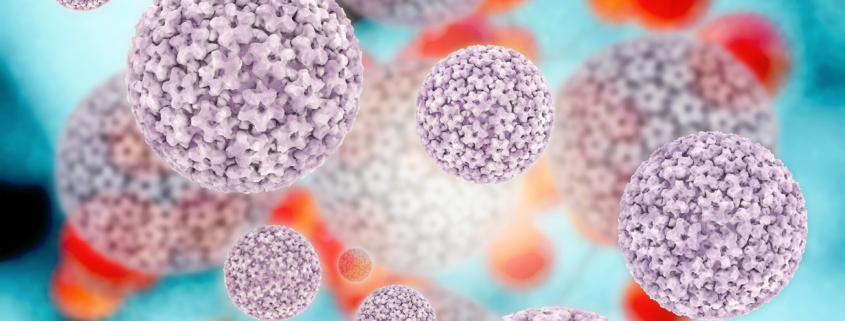
1. July 2021/by TowerPR
https://www.epitype.de/wp-content/uploads/2021/06/2100624_HPV-Test_Shutterstock.jpg 321 845 TowerPR https://www.epitype.de/wp-content/uploads/2025/09/epitype_website-logo-300x130.png TowerPR2021-07-01 13:07:422021-07-01 13:07:42Positive HPV test: What now?

Human papillomaviruses (HPV) – What is it?

Blog
Shutterstock

Human papillomaviruses are a group of widespread viruses. In most cases, people affected by the virus are unaware of the infection. However, certain types of HPV are responsible for the development of tumours, such as cervical cancer.

Almost everyone gets infected with HPV at some point in their lives. HP viruses are mainly transmitted by skin-to-skin contact, but also by sexual intercourse. The infection often remains undetected because no symptoms are noticed and the infection heals by itself. However, harmless or unpleasant warts, such as genital warts, can occur. In a few cases and with certain types of HPV, chronic HPV infection occurs, which can last for several years. This can lead to malignant cell changes. The consequence may be precancerous lesions or cancer. In particular, HP viruses are responsible for the development of cervical cancer. However, tumours in the mouth, vagina, penis and anal area can also be caused by human papillomaviruses.

High-risk HPV types

Not all HP viruses are causing cancer. To date, more than 200 HPV types have been conclusively identified, according to the Robert Koch Institute. They can be classified into five different groups: Alpha, beta, gamma, mu and nu HPV. Only the alpha-HPV group can infect the skin and mucousal cells in humans.

In general, these types can be subdivided into high- and low-risk types. The low-risk types (“low risk” viruses) can cause warts in the genital area. However, a life-threatening disease can be rarely feared when infected with low-risk HPV types. In contrast, high-risk types (high-risk viruses) can cause malignant cell changes, i.e. cancer.

Protection against HPV infection

Vaccination against HPV is the most effective protection against an HPV infection. Not even condoms provide sufficient protection during intercourse. Children aged nine and older can be vaccinated against certain high-risk HPV types. In general, vaccination should preferably be applied before the first sexual intercourse. This is true for both boys and girls alike, because vaccination not only protects against cervical cancer. There are also other types of cancer associated with HPV, as mentioned above. In addition to vaccination, women should visit their gynaecologist regularly for cancer screening.

6. March 2020/by Admin Spinger
https://www.epitype.de/wp-content/uploads/2020/03/shutterstock_186488216_web.jpg 1920 1920 Admin Spinger https://www.epitype.de/wp-content/uploads/2025/09/epitype_website-logo-300x130.png Admin Spinger2020-03-06 09:03:362020-10-09 14:14:22Human papillomaviruses (HPV) – What is it?

Early detection test GynTect® now available for Roche Diagnostics QPCR system

Press Releases
cobas Z480 Analyzer von Roche Diagnostics oncgnostics GmbH

Jena, 20. February, 2019 – The test for early detection of cervical cancer GynTect® may now also be performed on the cobas Z480 analyzer, a widely used quantitative PCR (QPCR) system from Roche Diagnostics. This is now possible through an extension of the GynTect® CE IVD mark (CE mark for in vitro diagnostics). The biotech company oncgnostics GmbH is developer and provider of GynTect®.

GynTect® allows a fast and reliable clarification, if a patient with abnormal Pap smear findings or an HPV infection, is about to develop or already has cervical cancer. GynTect® allows to detect modified, esp. methylated DNA regions. Methylation of these DNA regions specifically occurs in cervical cancer.

Performance of GynTect using the Cobas Z480
Two steps are required for the performance of GynTect®. In the first step a chemical treatment with bisulphite fixates the DNA methylation of the diagnostic material. For the detection of the marker regions a PCR (Polymerase Chain Reaction) is required. The cobas Z480 Analyzer by Roche Diagnostics allows the performance of such a diagnostic PCR. Based on the data obtained in the PCR, the GynTect® results are derived. Only originally methylated DNA regions present in the sample are amplified during the PCR. This procedure is termed methylation-specific PCR (MSP).

More laboratories may perform GynTect® now
“By now GynTect® could only be performed on the ABI7500 Real-Time PCR system from Life Technologies. Extension of the CE IVD mark now allows to run the test on the cobas Z480 PCR system as well. With its widespread availability many more laboratories now can perform GynTect® without any additional expenses”, Alfred Hansel, co-founder and CEO of oncgnostics said.

You may find free press material here:
www.oncgnostics.com/downloads
vimeo.com/243256803

21. February 2019/by TowerPR
https://www.epitype.de/wp-content/uploads/2019/02/190213_cobas_oncgnosticsGmbH.jpg 1902 2853 TowerPR https://www.epitype.de/wp-content/uploads/2025/09/epitype_website-logo-300x130.png TowerPR2019-02-21 17:25:252020-10-09 14:19:32Early detection test GynTect® now available for Roche Diagnostics QPCR system

Archive

Recent Posts

  • Worldwide unique test for cervical cancer as a gamechanger for the healthcare system
  • Jena Biotechnology Company Files for Insolvency
  • Bachelor thesis in biotechnology companies: From research to diagnostics 

Epitype GmbH

The Epitype GmbH, a spin-off of the University Hospital Jena, is a company working on molecular diagnostics with main focus on the development of in-vitro diagnostics based on epigenetic biomarkers.

Epitype GmbH is working according to ISO 13485 standards in research, development, production and management.

Recent Posts

  • Worldwide unique test for cervical cancer as a gamechanger for the healthcare system
  • Jena Biotechnology Company Files for Insolvency
  • Bachelor thesis in biotechnology companies: From research to diagnostics 

Contact

Epitype GmbH
Löbstedter Str. 41
07749 Jena
Germany

Phone: +49 (0)3641 5548500

Email: contact[at]epitype.de
Internet: www.epitype.de

© 2015 - 2025 Epitype GmbH Jena Germany
  • Start
  • Imprint
  • Contact Us
  • Privacy policy
Scroll to top

Cookies help us deliver our services. By using our services, you agree to our use of cookies.

Learn moreI accept

Cookie and Privacy Settings


How we use cookies

We may request cookies to be set on your device. We use cookies to let us know when you visit our websites, how you interact with us, to enrich your user experience, and to customize your relationship with our website.

Click on the different category headings to find out more. You can also change some of your preferences. Note that blocking some types of cookies may impact your experience on our websites and the services we are able to offer.

Essential Website Cookies

These cookies are strictly necessary to provide you with services available through our website and to use some of its features.

Because these cookies are strictly necessary to deliver the website, refusing them will have impact how our site functions. You always can block or delete cookies by changing your browser settings and force blocking all cookies on this website. But this will always prompt you to accept/refuse cookies when revisiting our site.

We fully respect if you want to refuse cookies but to avoid asking you again and again kindly allow us to store a cookie for that. You are free to opt out any time or opt in for other cookies to get a better experience. If you refuse cookies we will remove all set cookies in our domain.

We provide you with a list of stored cookies on your computer in our domain so you can check what we stored. Due to security reasons we are not able to show or modify cookies from other domains. You can check these in your browser security settings.

Other external services

We also use different external services like Google Webfonts, Google Maps, and external Video providers. Since these providers may collect personal data like your IP address we allow you to block them here. Please be aware that this might heavily reduce the functionality and appearance of our site. Changes will take effect once you reload the page.

Google Webfont Settings:

Google Map Settings:

Google reCaptcha Settings:

Vimeo and Youtube video embeds:

Privacy Policy

You can read about our cookies and privacy settings in detail on our Privacy Policy Page.

Privacy policy
Einstellungen akzeptierenVerberge nur die Benachrichtigung
Epitype GmbH
Einwilligung verwalten

Um Ihnen ein optimales Erlebnis zu bieten, verwenden wir Technologien wie Cookies, um Geräteinformationen zu speichern und/oder darauf zuzugreifen. Wenn Sie diesen Technologien zustimmen, können wir Daten wie das Surfverhalten oder eindeutige IDs auf dieser Website verarbeiten. Wenn Sie Ihre Einwilligung nicht erteilen oder zurückziehen, können bestimmte Merkmale und Funktionen beeinträchtigt werden.

Funktional Always active
Die technische Speicherung oder der Zugang ist unbedingt erforderlich für den rechtmäßigen Zweck, die Nutzung eines bestimmten Dienstes zu ermöglichen, der vom Teilnehmer oder Nutzer ausdrücklich gewünscht wird, oder für den alleinigen Zweck, die Übertragung einer Nachricht über ein elektronisches Kommunikationsnetz durchzuführen.
Präferenzen
Die technische Speicherung oder der Zugriff ist für den rechtmäßigen Zweck der Speicherung von Präferenzen erforderlich, die nicht vom Abonnenten oder Benutzer angefordert wurden.
Statistiken
Die technische Speicherung oder der Zugriff, der ausschließlich zu statistischen Zwecken erfolgt. Die technische Speicherung oder der Zugriff, der ausschließlich zu anonymen statistischen Zwecken verwendet wird. Ohne eine Vorladung, die freiwillige Zustimmung deines Internetdienstanbieters oder zusätzliche Aufzeichnungen von Dritten können die zu diesem Zweck gespeicherten oder abgerufenen Informationen allein in der Regel nicht dazu verwendet werden, dich zu identifizieren.
Marketing
Die technische Speicherung oder der Zugriff ist erforderlich, um Nutzerprofile zu erstellen, um Werbung zu versenden oder um den Nutzer auf einer Website oder über mehrere Websites hinweg zu ähnlichen Marketingzwecken zu verfolgen.
  • Manage options
  • Manage services
  • Manage {vendor_count} vendors
  • Read more about these purposes
Einstellungen ansehen
  • {title}
  • {title}
  • {title}